


Why and how companies should protect migrant workers in the Netherlands
Migrant workers play a key role in many sectors in the Netherlands, yet they face considerable negative human rights impacts. In this blog, we outline what those impacts are and why they are so persistent. We also discuss some practical steps companies can take towards protecting migrant workers’ rights.
Context
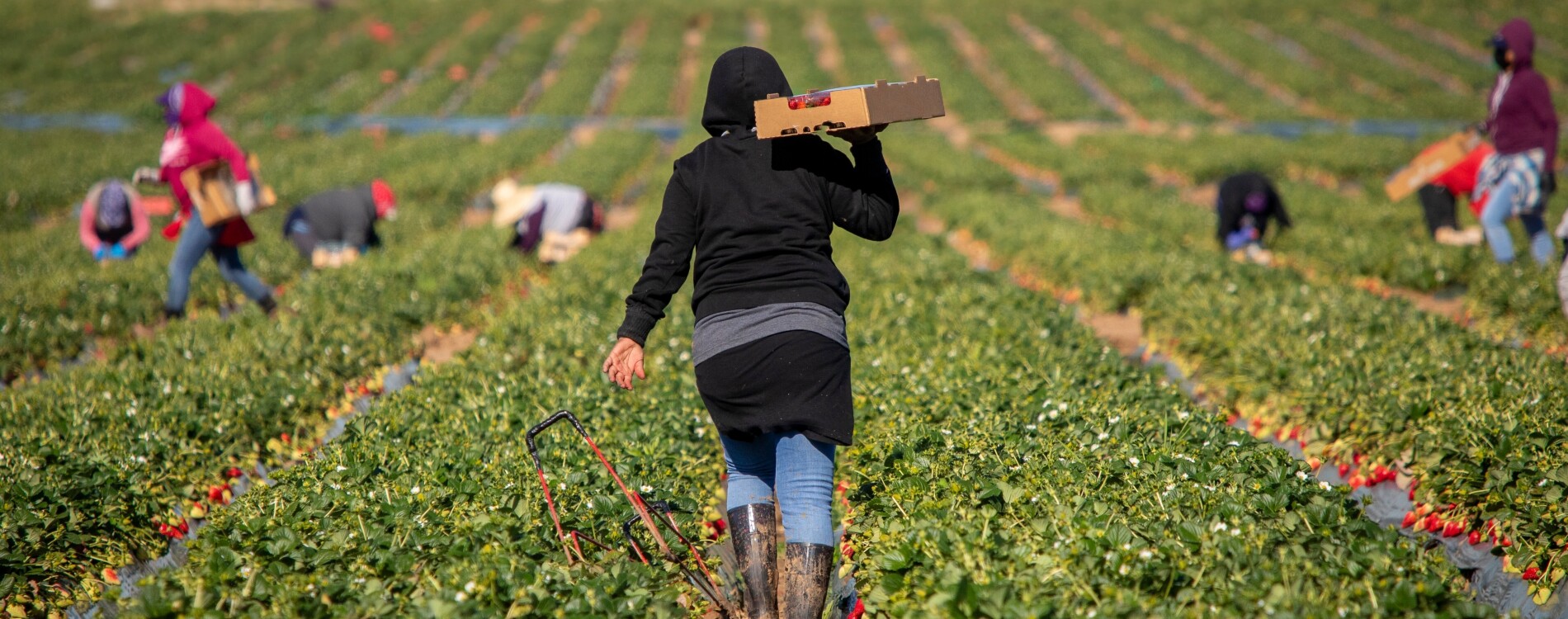
The estimates of the current number of migrant workers in the Netherlands range considerably from 700.000 to 1.7 million. However, there are around an estimated 230.000 migrant workers in the Netherlands who are in a vulnerable position: these are people that work in sectors involving physical labour under hazardous conditions, for low wages. Key sectors they work in include agri- and horticulture, construction, logistics, the meat processing industry, and the metal industry. The majority of these workers are from central and eastern-European Union countries, including Poland (40%), Romania (18%), Bulgaria (10%), and Hungary (2%). Many of them are temporary workers recruited through temporary employment agencies.
Key impacts
Migrant workers in the Netherlands face various negative human rights impacts. First of all, there are significant risks and documented cases of wage-related abuses, with migrant workers often earning very low wages, sometimes below the minimum wage. Cases of delayed payment, non-payment of wages, and unpaid overtime have also been reported. When workers are hired through temporary employment agencies, wages are frequently reduced through deductions for services such as accommodation and transport.
In addition, these workers commonly have flexible, short-term contracts, even when performing structurally permanent work, which creates structural job insecurity. Working days can be long and highly variable, sometimes without timely notification, and the work itself is often physically demanding. Migrant workers also face an increased risk of workplace accidents. One study, conducted by a hospital in Zwolle, found that workers with an Eastern European background were five times more likely to end up in the ER after a workplace accident compared to the rest of the working population in the region.
Beyond the workplace, migrant workers are regularly housed in poor-quality or overcrowded accommodation. A 2023 panel found that around half of migrant workers in vulnerable positions are not satisfied with their housing situation. Housing is often small, overcrowded, unhygienic, and sometimes lacks basic facilities such as adequate heating. In extreme cases, workers are forced to share mattresses in shifts. Accommodation is frequently located far from towns, workplaces, and healthcare or social services, contributing to social isolation.
Discrimination, intimidation, and unequal treatment further exacerbate the vulnerability of migrant workers. Compared to Dutch workers, migrant workers are more likely to experience bullying, intimidation, or harassment by supervisors or colleagues, according to research by SEO. This contributes to psychosocial work-related stress and reinforces existing power imbalances in the workplace.
The role of the Dutch government
Companies often point to the responsibility of the Dutch government and the Nederlandse Arbeidsinspectie (Labour Inspectorate) to address these impacts. In recent years, the Dutch government has indeed taken various steps to ensure better protection of migrant workers’ rights. For example, the website WorkinNL was established to provide information on topics such as housing, contracts, and wages in various languages. The Wet goed verhuurderschap makes it mandatory to offer the employment contract and the rental contract separately when renting housing to labor migrants. Crucially, the upcoming Wet toelating terbeschikkingstelling van arbeidskrachten (WTTA) proposes a public admission system in which temporary agencies will only be allowed to provide workers if they have been admitted by the Ministry of Social Affairs and Employment. Companies may also only hire workers from agencies that have been admitted. Fines of up to €90.000 can be imposed for violating the law, which will apply from 1 January 2027. The Labour Inspectorate will start enforcing it from 1 January 2028.
Why impacts are so persistent
Despite these efforts, organizations working with migrant workers, such as FairWork, keep reporting negative human rights incidents surrounding migrant workers. Why are these impacts so persistent?
First of all, workers are often unfamiliar with the Dutch language, systems, regulations, and healthcare pathways. Coupled with the absence of family or social networks, this can make it difficult to navigate day-to-day life and can leave migrant workers socially isolated. This makes accessing justice difficult.
Second, and more fundamentally, migrant workers are often highly dependent on their employer or temporary agency not only for income, but also for housing, transportation, health insurance, and even assistance with administrative procedures such as registering with municipal authorities or accessing medical care. As there have been documented cases of retaliation, such as non-renewal of contracts, worsening conditions, forced overtime, or dismissal, migrant workers may not speak up out of fear of losing not only their job and income, but also their accommodation, insurance, and in the case of workers from outside the EU, legal status in the country. As a result, migrant workers often tolerate hazardous working conditions, long and unpredictable hours, and inadequate housing. The resulting fatigue is a contributing factor to workplace accidents.
In addition, some employers actively exploit this dependency by stretching legal frameworks to their advantage or using them as a business model. Cost savings may for example be realised through overcrowded or poorly maintained housing while still deducting the maximum allowed share of wages, or by placing workers far from the workplace and charging high transport fees without compensating travel time. Complex subcontracting and posting arrangements may formally comply with the law but in practice reduce wages and limit access to Dutch social security and labour protections. In some cases, these arrangements are deliberately made opaque, making it difficult for inspectors to verify whether Dutch companies are complying with regulations.
The role of companies
Internationally recognised frameworks, such as the UN Guiding Principles on Business and Human Rights (UNGPs) have established that all companies have a responsibility to respect human rights, including the rights of migrant workers, throughout their supply chain. This means that companies need to take action to protect migrant workers’ rights regardless of whether these workers are directly employed or engaged through temporary agencies, contractors, or suppliers. Companies should therefore consider how migrant workers are recruited within their own and in their business partners’ operations. Companies should assess the business practices of the temporary agencies they work with, and ask business partners that work with temporary agencies to do the same. This applies in the Dutch context as well, where government policy measures may set important baselines yet do not fully eliminate risks in practice.
Fundamentally, negative human rights impacts related to migrant workers need to be a key part of the human rights due diligence process (HRDD). In practice, this starts with identifying the various business enterprises and intermediaries that are involved in the hiring and posting of migrant workers, followed by conducting targeted risk assessments that explicitly include temporary work agencies, subcontractors, service providers, and key suppliers, and that examine recruitment practices, housing arrangements, transport, working hours, and access to social protection.
Addressing identified risks requires clear expectations and active engagement. Companies can use contracts, pre-qualification processes, and supplier codes of conduct to set explicit standards on the treatment of migrant workers, and support business partners through guidance, training, and capacity-building where needed. Monitoring should not rely solely on traditional audits or checklists, but include worker-centric approaches that create space for migrant workers to safely share their experiences, for example through interviews, surveys, or collaboration with trusted civil society organisations and trade unions. Accessible and trusted grievance mechanisms are essential to ensure workers can raise concerns without fear of retaliation.
How 2impact can help
While HRDD may sound complex, companies don’t have to do it alone. 2impact offers capacity building, practical tools, examples, and guidance for identifying and addressing risks related to migrant worker rights. If you’re interested in learning more, sign up for our free Lunch & Learn on protecting migrant worker rights through HRDD on 12 March 2026. Sign up through our registration page here.